Strength training is an important part of athletic development. While many people associate strength training with building bigger muscles, its benefits for athletes go much further.
A properly designed strength program can help athletes develop power, stability, balance, movement control, and physical resilience. These qualities can support better performance across a wide range of sports.
Whether you are a football player, runner, basketball player, swimmer, tennis player, or young developing athlete, strength training can become an important part of your overall training program.
What Is Strength Training?
Strength training involves exercises that challenge your muscles to produce force. This can be achieved using bodyweight exercises, resistance bands, free weights, machines, or other forms of resistance.
Common strength-training exercises include:
- Squats
- Lunges
- Push-ups
- Pull-ups
- Deadlifts
- Rows
- Presses
- Core exercises
The exercises and training intensity should be selected according to the athlete’s sport, age, experience, and individual goals.
1. Improves Athletic Power
Strength provides the foundation for power.
Power is the ability to produce force quickly, which is important in movements such as sprinting, jumping, throwing, and changing direction.
For example, a basketball player needs explosive power to jump, while a sprinter needs to generate significant force against the ground during acceleration.
Strength training can help develop the physical foundation needed for these explosive movements.
2. Supports Speed and Acceleration
Speed is not only about moving your legs quickly. It also depends on how effectively you can apply force to the ground.
Developing lower-body strength can help athletes improve their ability to accelerate and maintain efficient movement mechanics.
Combining strength training with sprint and technique work can create a more complete approach to speed development.
3. Improves Stability and Balance
Athletes constantly need to control their bodies while moving.
Strength training can improve stability around important joints and help athletes maintain control during movements such as landing, cutting, jumping, and changing direction.
A strong and stable body can allow athletes to perform movements with greater control and efficiency.
4. Helps Support Injury Prevention
Sports place repeated demands on muscles, joints, and connective tissues.
Strength training can help athletes prepare their bodies for these demands by developing stronger muscles and improving movement control.
For example, exercises that strengthen the legs and hips can support better control during running, jumping, and landing.
However, strength training is only one part of injury prevention. Proper technique, recovery, mobility, training-load management, and sport-specific preparation are also important.
5. Improves Core Strength
The core plays an important role in athletic movement.
A strong core helps transfer force between the upper and lower body and provides stability during many sports movements.
Core training can include exercises such as:
- Planks
- Side planks
- Dead bugs
- Bird dogs
- Controlled rotational exercises
A well-developed core can contribute to better balance, stability, and movement efficiency.
6. Builds Physical Confidence
Strength development can also improve an athlete’s confidence.
As athletes become stronger and more capable of performing challenging movements, they may feel more confident during training and competition.
This confidence can contribute to a stronger mindset and greater willingness to take on new challenges.
7. Supports Long-Term Athletic Development
Strength training should not be viewed only as preparation for the next competition.
When properly programmed, it can contribute to long-term physical development.
Athletes can gradually progress from basic movement patterns to more advanced exercises as their experience and physical abilities improve.
The focus should always be on quality movement, appropriate progression, and consistency.
Strength Training for Young Athletes
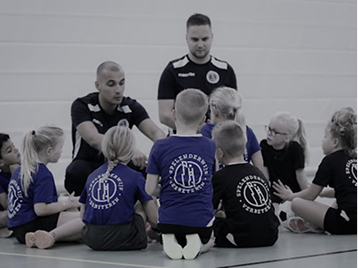
Young athletes can also benefit from appropriately designed strength training.
The emphasis should be on learning proper movement patterns, developing coordination, building basic strength, and creating good training habits rather than simply lifting heavy weights.
Exercises should be age-appropriate and performed under appropriate supervision when necessary.
How Often Should Athletes Strength Train?
The ideal training frequency depends on several factors, including the athlete’s sport, competition schedule, age, experience, and overall training program.
Some athletes may benefit from multiple strength sessions each week, while others may require fewer sessions depending on their other training demands.
The goal is to find the right balance between training stimulus and recovery.
Don’t Forget Recovery
Strength training creates physical stress that the body needs time to recover from.
Adequate sleep, nutrition, hydration, rest, and appropriate training volume are essential for adapting to strength training.
More training is not always better. A well-planned program should provide enough recovery to allow the athlete to continue progressing.
Final Thoughts
Strength training is much more than building muscle. For athletes, it can help develop power, speed, stability, balance, movement control, and physical resilience.
When combined with sport-specific training, conditioning, mobility work, proper nutrition, and recovery, strength training can become a valuable part of a complete athletic development program.
Build strength. Move better. Perform better.